
Dublin Core
Identifier
1543
Title
Entrance to Newport Drawing
Description
Entree_de_l_escadre_francaise_en_baie_de_Newport_1778_Ozanne.jpg
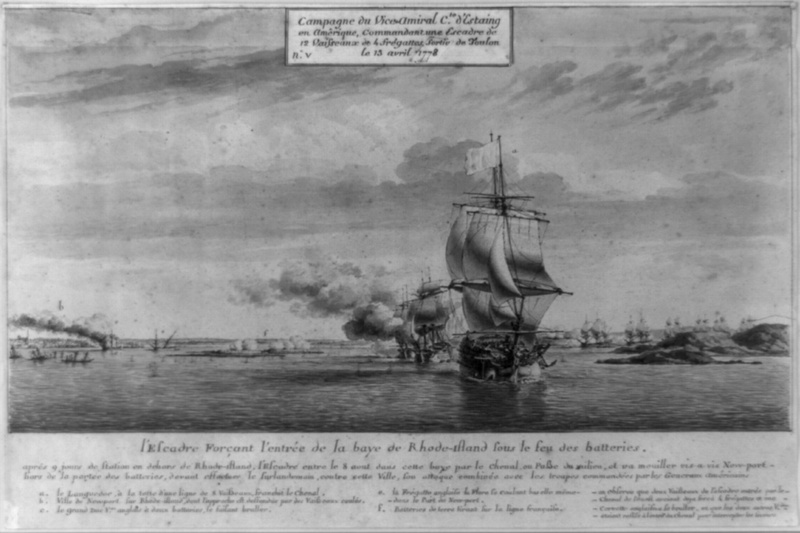
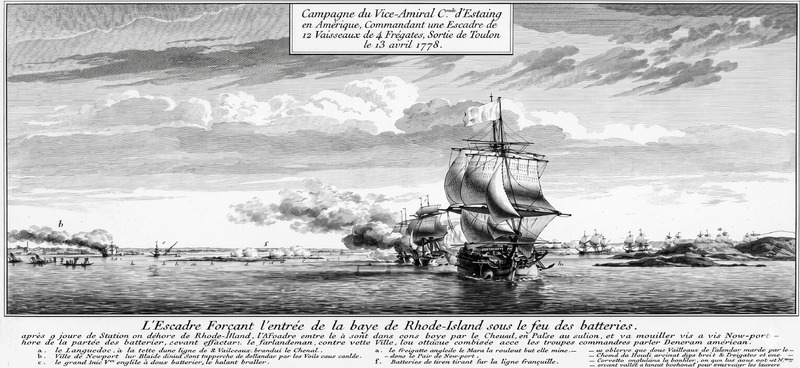
Digital image of a drawing by Ozanne depicting the entrance of the French Fleet into Narragansett Bay in August of 1778
Digital image of a drawing by Ozanne depicting the entrance of the French Fleet into Narragansett Bay in August of 1778
Title Translation:
Campaign of Vice Admiral Count d’Estaing in America, commanding a squadron of 12 ships of the line and 4 frigates, having left Toulon on April 13, 1778
Campaign of Vice Admiral Count d’Estaing in America, commanding a squadron of 12 ships of the line and 4 frigates, having left Toulon on April 13, 1778
Legend Tranlation:
The Squadron forcing entry into the Bay of Rhode Island under fire from the batteries.
After 9 days of stationing outside of Rhode Island, the squadron enters this bay on August 8 through the channel or the 'Pass of the Sun,' and goes to anchor across from Newport—out of range of the batteries—intending to carry out an attack the next day against this town, in a combined operation with the American troops
The Squadron forcing entry into the Bay of Rhode Island under fire from the batteries.
After 9 days of stationing outside of Rhode Island, the squadron enters this bay on August 8 through the channel or the 'Pass of the Sun,' and goes to anchor across from Newport—out of range of the batteries—intending to carry out an attack the next day against this town, in a combined operation with the American troops
Type
Picture/Photo, Document
Format
Digital Image
Date
8/8/1778
Digital Image Item Type Metadata
Commentary
This artwork portrays a pivotal moment during the American Revolutionary War: the arrival of the French fleet in Narragansett Bay to support the American cause during the **Battle of Rhode Island** in August 1778.
Specifically, it depicts the French squadron, commanded by Vice Admiral Charles Henri Hector d'Estaing, forcing its way past British coastal batteries and into Newport Harbor.
### Translation of the Text
The writing is in 18th-century French. Here is the translation of the main sections:
**The Top Banner:**
> "Campaign of Vice Admiral Count d’Estaing in America, commanding a squadron of 12 ships of the line and 4 frigates, having left Toulon on April 13, 1778."
**The Bottom Title:**
> "The Squadron forcing entry into the Bay of Rhode Island under fire from the batteries."
**The Descriptive Paragraph:**
> "After 9 days of stationing outside of Rhode Island, the squadron enters this bay on August 8 through the channel or the 'Pass of the Sun,' and goes to anchor across from Newport—out of range of the batteries—intending to carry out an attack the next day against this town, in a combined operation with the American troops."
---
### Historical Context
The image illustrates the tactical maneuver where d'Estaing’s ships had to run a gauntlet of British cannons positioned on the shores of Conanicut Island (where the Beavertail Lighthouse is located) and Aquidneck Island.
In the artwork, you can see:
- **The French Ships:** Sailing in a line (the _line of battle_) to concentrate their firepower.
- **The Combat:** Small puffs of smoke on the horizon and near the ships indicate the exchange of cannon fire between the fleet and the British land batteries.
- **The Objective:** Newport (indicated by the letter 'b' in the key) was the primary British stronghold in the region at the time.
This event was a major morale boost for the American revolutionaries, as it marked the first significant naval intervention by their new French allies, though the subsequent land battle and a massive storm eventually forced the French to withdraw to Boston for repairs.
Would you like to know more about how the British responded to this arrival, or perhaps more about the specific ships shown in the line?
# The British Response
The British response to the arrival of Admiral d'Estaing’s fleet was a mixture of strategic panic and a "scorched earth" defensive policy. Because the British were outgunned at sea, they focused on preventing the French from seizing their ships and securing Newport's land defenses.
Here is how the response unfolded:
### 1. The Destruction of the British Fleet
The British realized they could not win a naval battle against the massive French ships of the line. To prevent their vessels from being captured and used against them, they took drastic measures:
- **Scuttling Ships:** They intentionally sank several of their own frigates and smaller vessels in Newport Harbor to create underwater blockades.
- **Burning Ships:** Ships like the _HMS Flora_ and _HMS Juno_ were set on fire by their own crews as the French approached to ensure the "prizes" of war were destroyed.
### 2. Strengthening "Butts" and Batteries
While the French were forcing the channel (as seen in your image), the British land forces, led by General Robert Pigot, retreated into a heavily fortified "inner line" of defense.
- **The Newport Line:** They abandoned the outer parts of the island to concentrate their 6,000 troops around the town of Newport itself.
- **Artillery Duels:** British batteries at places like Brenton Point and Goat Island engaged in fierce artillery duels with the passing French ships to inflict as much hull damage as possible.
### 3. Tactical Scarcity (Scorched Earth)
To ensure the arriving French and the approaching American land forces (under General John Sullivan) had no resources to rely on, the British systematically stripped the countryside:
- **Livestock & Crops:** They seized or destroyed local cattle, sheep, and grain stores.
- **Deforestation:** They cut down nearly every tree on the north end of the island to clear lines of sight for their cannons and to provide wood for fortifications.
### 4. The Response at Beavertail
During this period of heightened defense, the British became extremely protective of the West Passage. They occupied the **Beavertail Lighthouse** area as a primary lookout point. While the final burning of the lighthouse didn't happen until their total evacuation in 1779, the arrival of the French in 1778 caused the British to militarize the point, turning the lighthouse from a navigational aid into a strategic military outpost to watch for French reinforcements.
### 5. The "Great Storm" Gamble
Ultimately, the British were saved not by their own navy, but by nature. As d'Estaing prepared to land troops, a second British fleet under Admiral Lord Howe appeared. Before the two navies could engage in a full-scale battle, a massive hurricane (known historically as the **"Great Storm of 1778"**) hit.
- The storm scattered and badly damaged both fleets.
- The French were forced to sail to Boston for repairs, effectively ending the immediate threat to the British at Newport and leaving the American land forces without the naval support they were promised.
This British "hold out" strategy was successful; they maintained control of Newport for another full year until they voluntarily evacuated in October 1779.
Specifically, it depicts the French squadron, commanded by Vice Admiral Charles Henri Hector d'Estaing, forcing its way past British coastal batteries and into Newport Harbor.
### Translation of the Text
The writing is in 18th-century French. Here is the translation of the main sections:
**The Top Banner:**
> "Campaign of Vice Admiral Count d’Estaing in America, commanding a squadron of 12 ships of the line and 4 frigates, having left Toulon on April 13, 1778."
**The Bottom Title:**
> "The Squadron forcing entry into the Bay of Rhode Island under fire from the batteries."
**The Descriptive Paragraph:**
> "After 9 days of stationing outside of Rhode Island, the squadron enters this bay on August 8 through the channel or the 'Pass of the Sun,' and goes to anchor across from Newport—out of range of the batteries—intending to carry out an attack the next day against this town, in a combined operation with the American troops."
---
### Historical Context
The image illustrates the tactical maneuver where d'Estaing’s ships had to run a gauntlet of British cannons positioned on the shores of Conanicut Island (where the Beavertail Lighthouse is located) and Aquidneck Island.
In the artwork, you can see:
- **The French Ships:** Sailing in a line (the _line of battle_) to concentrate their firepower.
- **The Combat:** Small puffs of smoke on the horizon and near the ships indicate the exchange of cannon fire between the fleet and the British land batteries.
- **The Objective:** Newport (indicated by the letter 'b' in the key) was the primary British stronghold in the region at the time.
This event was a major morale boost for the American revolutionaries, as it marked the first significant naval intervention by their new French allies, though the subsequent land battle and a massive storm eventually forced the French to withdraw to Boston for repairs.
Would you like to know more about how the British responded to this arrival, or perhaps more about the specific ships shown in the line?
# The British Response
The British response to the arrival of Admiral d'Estaing’s fleet was a mixture of strategic panic and a "scorched earth" defensive policy. Because the British were outgunned at sea, they focused on preventing the French from seizing their ships and securing Newport's land defenses.
Here is how the response unfolded:
### 1. The Destruction of the British Fleet
The British realized they could not win a naval battle against the massive French ships of the line. To prevent their vessels from being captured and used against them, they took drastic measures:
- **Scuttling Ships:** They intentionally sank several of their own frigates and smaller vessels in Newport Harbor to create underwater blockades.
- **Burning Ships:** Ships like the _HMS Flora_ and _HMS Juno_ were set on fire by their own crews as the French approached to ensure the "prizes" of war were destroyed.
### 2. Strengthening "Butts" and Batteries
While the French were forcing the channel (as seen in your image), the British land forces, led by General Robert Pigot, retreated into a heavily fortified "inner line" of defense.
- **The Newport Line:** They abandoned the outer parts of the island to concentrate their 6,000 troops around the town of Newport itself.
- **Artillery Duels:** British batteries at places like Brenton Point and Goat Island engaged in fierce artillery duels with the passing French ships to inflict as much hull damage as possible.
### 3. Tactical Scarcity (Scorched Earth)
To ensure the arriving French and the approaching American land forces (under General John Sullivan) had no resources to rely on, the British systematically stripped the countryside:
- **Livestock & Crops:** They seized or destroyed local cattle, sheep, and grain stores.
- **Deforestation:** They cut down nearly every tree on the north end of the island to clear lines of sight for their cannons and to provide wood for fortifications.
### 4. The Response at Beavertail
During this period of heightened defense, the British became extremely protective of the West Passage. They occupied the **Beavertail Lighthouse** area as a primary lookout point. While the final burning of the lighthouse didn't happen until their total evacuation in 1779, the arrival of the French in 1778 caused the British to militarize the point, turning the lighthouse from a navigational aid into a strategic military outpost to watch for French reinforcements.
### 5. The "Great Storm" Gamble
Ultimately, the British were saved not by their own navy, but by nature. As d'Estaing prepared to land troops, a second British fleet under Admiral Lord Howe appeared. Before the two navies could engage in a full-scale battle, a massive hurricane (known historically as the **"Great Storm of 1778"**) hit.
- The storm scattered and badly damaged both fleets.
- The French were forced to sail to Boston for repairs, effectively ending the immediate threat to the British at Newport and leaving the American land forces without the naval support they were promised.
This British "hold out" strategy was successful; they maintained control of Newport for another full year until they voluntarily evacuated in October 1779.